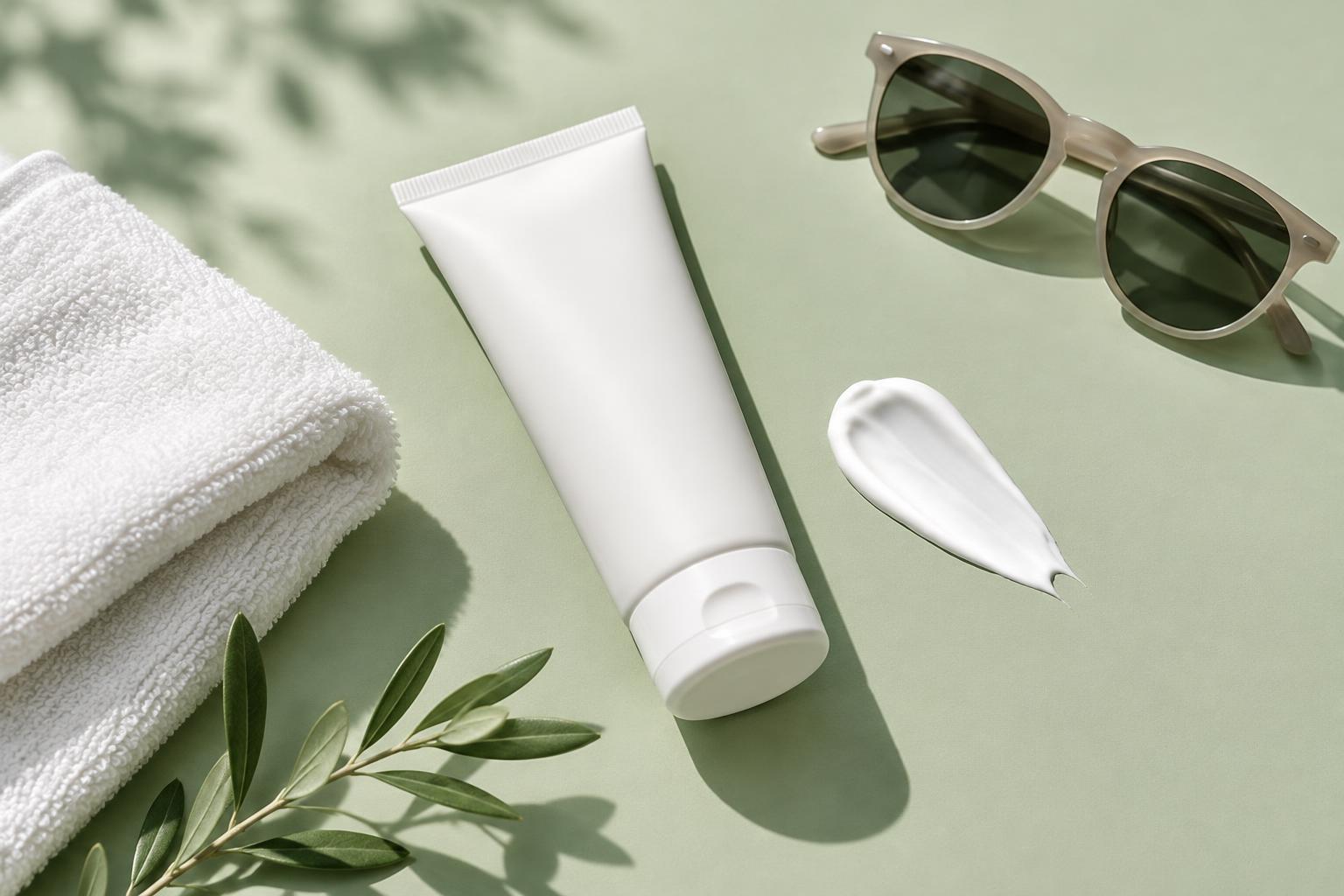
Choose broad-spectrum, water-resistant SPF 30 or higher. No SPF makes sunscreen a once-a-day shield for hours outdoors.
What SPF tells you—and what it does not
SPF describes protection against sunburn-producing UVB under test conditions. A higher number provides more UVB protection, but it does not mean you can safely stay outside proportionally longer or skip reapplication.
Look for “broad spectrum,” which indicates protection against both UVA and UVB. The American Academy of Dermatology recommends broad-spectrum, water-resistant sunscreen with SPF 30 or higher.
Amount and coverage matter
Most adults need about one ounce to cover exposed body skin. Follow your product’s label, apply before going outdoors, and remember easily missed areas such as ears, the neck, feet, and the backs of the hands.
Using a tiny amount of SPF 50 is not the same as achieving its tested protection. Choose a texture you will apply generously and consistently rather than selecting on the SPF number alone.
Reapply for the day you are actually having
When outdoors, reapply at least every two hours, and after swimming or sweating according to the product’s water-resistance instructions. Sunscreen is not waterproof; the label specifies its water-resistance period.
An indoor morning routine is different from a full afternoon at the pool or on a trail. Plan for your exposure and carry sunscreen when you will need to reapply.
Build protection beyond the bottle
Seek shade and use protective clothing, a wide-brimmed hat, and sunglasses. These measures work alongside sunscreen rather than competing with it.
If sunscreen repeatedly causes irritation, ask your dermatologist about a different formulation. If you notice a new or changing skin spot, sun protection is important—but it does not replace having that spot examined.
Sources & further reading
Educational information only, not a diagnosis or personal medical advice. Discuss individual symptoms and treatments with a qualified healthcare professional. Images are illustrative.